
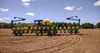

Direct Drilling vs Full Cultivation
Dec 2nd 2025
Introduction to Soil Cultivation Methods
In large-scale agriculture, soil cultivation stands as a pivotal factor in driving efficient crop establishment, safeguarding soil health, and scaling productive outputs. How we manage the soil beneath our feet fundamentally influences everything from moisture retention to the microbial ecosystems that underpin robust crop growth. Among the array of soil cultivation techniques, two primary methods warrant our attention: Direct Drilling and Full Cultivation. Both carry distinct advantages and operational realities that deserve careful evaluation before deployment in extensive farming operations.
Understanding Direct Drilling
What is Direct Drilling?
Direct drilling, often called no-till or strip till, is essentially the art of sowing seeds directly into undisturbed soil layers. This approach allows one to place seed precisely with a seed drill, sidestepping the conventional tillage routines that disrupt soil layers and deplete organic matter. Retaining crop residues and harvest residues on the surface, it preserves soil structure and fosters vital soil conservation, setting the stage for healthier soil microbes and more sustainable crop cycles.
Techniques and Equipment
In practice, direct drilling employs specialized equipment such as seed drills equipped with opening seed discs or coulters. These implementations penetrate the soil ever so gently-typically depositing seed at depths ranging from 3 to 8 centimeters ensuring that minimal soil disturbance occurs while promoting strong seed-to-soil contact. On large farms, controlled traffic farming becomes critical to mitigate soil compaction, confining machinery movement to designated tracks and safeguarding the integrity of your soil properties.
Various models of minimal soil disturbance drills facilitate adapting the method according to terrain and residue loads, a crucial factor when handling heavy crop residues or tougher previous crops. This nuanced approach demonstrates you're not merely adopting a technique but tailoring soil cultivation to your land's inherent characteristics.
Benefits of Direct Drilling
- The benefits here are compelling. By maintaining soil structure and preserving organic matter, direct drilling enhances moisture retention—a lifeline during drought conditions—and significantly curtails erosion threats. The presence of crop residues on the surface functions as a natural protective blanket, fostering biodiversity and invigorating soil microbes essential to long-term soil health.
- Operationally, the method compresses your fieldwork timeline, reducing fuel consumption and machinery wear by eliminating multiple tillage passes. It's not uncommon to observe faster pasture or crop recovery, which is a boon when managing tight crop rotations or responding to fluctuating market demands. These efficiencies translate into cost savings and highlight a sustainable edge increasingly sought by agribusiness stakeholders.
Challenges and Considerations with Direct Drilling
- Yet, let’s not gloss over the challenges. Effective weed management often pivots on herbicide application, as surface-level weed seeds are less likely to be physically suppressed by soil covering. Managing harvest residues concurrently can become a juggling act—excess residues may hamper seed placement and germination unless handled adeptly.
- Further, the upfront investment in specialized machinery may pose a hurdle, particularly in highly mechanized operations where equipment utilization drives capital efficiency. Soil compaction remains a lurking adversary, especially under wheel tracks, reminding us that minimal disturbance doesn’t equate to zero impact. Proactive strategies must be in place to monitor and mitigate these risks for sustained success.
Understanding Full Cultivation
What is Full Cultivation?
Turning the soil quite literally has been a long-standing pillar of farming with full cultivation. This technique involves ploughing, harrowing, and comprehensive seedbed preparation designed to create an optimal planting environment. By thoroughly working the soil, we ensure that crop residues and organic amendments blend seamlessly into the soil matrix, facilitating a uniform seedbed.
Techniques and Practices
Full cultivation typically operates at varying tillage depths, depending on soil type and crop requirements, utilizing plows or cultivators to turn over the soil efficiently. This process incorporates crop residues and fertilizers into the soil layers, enriching soil properties where roots can access nutrients directly. You achieve a finely conditioned seedbed that maximizes seed-to-soil contact, which is critical for consistent and vigorous crop establishment on expansive fields.
The Speedtiller is one of the best tools on the market to incorporate previous crop residues which has proven to increase soil health. This one pass tillage tool also provides the perfect seedbed, which fosters a smoother operational flow during planting.
Benefits of Full Cultivation
- Full cultivation excels in burying weed seeds and disrupting pest habitats, providing a level of control that can be harder to achieve with direct drilling. The resultant uniform seedbed is a boon for consistent germination, reducing variability across acres of crops something every large-scale manager appreciates for dependable yields.
- This practice also promotes nutrient mixing, enhancing soil fertility through the integration of organic matter and amendments. Moreover, it offers the opportunity to mechanically address soil compaction zones and evenly distribute residues, ensuring a balanced soil profile ready to support robust crop growth.
Challenges and Drawbacks of Full Cultivation
- However, these benefits come at a cost. The process increases vulnerability to soil erosion and can degrade soil structure over time, potentially compromising soil health in the long haul. Higher fuel consumption, increased labor demands, and accelerated machinery wear also weigh heavily on operational budgets.
- Furthermore, disturbance of soil layers often leads to moisture loss, a significant consideration in regions where water conservation is paramount. The disruption of soil biology, including essential soil microbes and carbon sequestration processes, adds another layer of environmental impact that large-scale operations must reckon with in today's sustainability-conscious landscape.
Comparative Insights: Direct Drilling vs Full Cultivation
Soil Health and Environmental Impact
From a soil health standpoint, direct drilling is a champion for preserving the natural order of soil layers and organic content, fostering an environment conducive to active soil microbes and improved soil conservation. Full cultivation, while beneficial for handling residues and weed control, can accelerate erosion risks, however, this can be avoided by planting cover crops.
Cost and Operational Considerations
When scrutinizing costs, direct drilling often leads to savings in fuel, labor, and reduced machinery depreciation, although the specialist equipment investment cannot be overlooked. Conversely, full cultivation reliance on conventional tillage machinery might ease capital outlay but will demand more frequent maintenance and operational spend over time.
Crop and Soil Suitability
Your soil type and crop portfolio decisively influence which method best fits your operation. Sandy soils prone to erosion tend to thrive under direct drilling protective residue cover. Heavy clay soils, by contrast, might benefit from occasional full or shallow cultivation to alleviate compaction and improve seedbed soil structure for enhanced crop establishment. Terrain also plays a critical role; hillsides and slopes invariably call for conservation-focused methods to prevent runoff and soil loss.
Weed, Pest, and Disease Management
Neither method fully escapes the complexities of pest and weed management. Direct drilling demands vigilant herbicide stewardship and strategic residue management to counteract surface weed seeds and pest habitats. Meanwhile, full cultivation offers mechanical control but may inadvertently increase the germination of buried weed seeds, creating challenges later in the season. An integrated pest management plan, tailored to your cultivation choice, is indispensable.
Innovative and Hybrid Approaches
Recognizing the strengths and limitations of both, many large operations have embraced innovative hybrids such as reduced tillage, strip-till, and min-till practices. These approaches artfully blend minimal soil disturbance with targeted soil working, aiming to optimize soil health, operational efficiency, and crop establishment simultaneously. It's a balancing act that takes into consideration your soil properties, crop demands, and sustainability .
Making the Right Choice for Your Farm
- What factors should guide your decision? Long term goals, soil health status, crop selections, cost structures, operational scale, and available machinery all converge in this decision. Emphasizing long-term soil management will safeguard your farms productivity amid evolving challenges.
- For those contemplating a shift toward direct drilling or integrating hybrid techniques, a phased approach is trials and closely monitoring soil compaction, residue management, and crop response. This measured method ensures you unlock the full potential of any cultivation strategy while managing risk.
Making Informed Choices for Sustainable Soil Health
In closing, the path between direct drilling and full cultivation is far from one-dimensional. Each method carries its distinct blend of benefits and operational demands, and neither stands as a silver bullet for all farming contexts. By rigorously assessing your soil types, crop requirements, and management realities, you empower your operation to forge the most effective, sustainable soil cultivation strategy. After all, nurturing the land beneath us is not merely a task, it's an investment in the future resilience and success of our agricultural enterprises.
Your Trusted Partner in Soil Cultivation Success
At RangeLine Group, we appreciate the complexities you face managing large-scale crop production and the critical role soil cultivation plays in optimizing your yields. Whether you’re refining your approach with direct drilling or full cultivation, we provide the durable equipment and replacement parts you need to support your operation’s unique demands. From our tillage parts like aerator tines, field cultivator replacement parts, and strip-till components, to planter parts and fertilizer application, we ensure your machinery runs smoothly in the field, which is what makes us stand apart from our competition. We want your equipment running to its full potential in the fields, which is why we take the time to properly train our customers and make sure settings are all correct before we leave your farm.
Understanding the balance between minimal soil disturbance and thorough seedbed preparation is key to protecting your soil structure and promoting healthy crop growth. With our support, including high-quality coulter blades and disc harrows designed for diverse soil properties and residue management, you can control soil compaction, improve organic matter, and accelerate crop establishment across your fields. We commit to supplying you with reliable solutions tailored to the realities of large-scale farming—helping you maximize productivity while stewarding your soil’s long-term health.
Let’s work together to enhance your farm’s potential through smart cultivation practices and dependable equipment, because at the end of the day, your success is our priority.